
H1N1 Test (Swine Flu) – Price, Process & RT-PCR Results
+91 9811156942
H1N1 (Swine Flu) Test in Delhi– Price, Process & RT-PCR Results
The H1N1 test, commonly known as the Swine Flu test, is an important diagnostic tool that helps detect the H1N1 influenza virus, a contagious flu virus that has affected millions globally. Whether you’re in India or travelling from abroad, early detection through this test can help prevent complications and protect your loved ones.
At Thyrocare, we provide H1N1 testing for both Indian and international patients. Accurate, timely, and affordable.
What is the H1N1 Test or H1N1 Virus Test?
H1N1 – Hemagglutinin Type 1 and Neuraminidase Type 1 Influenza A Virus
The H1N1 test is a lab test designed to detect the presence of the H1N1 virus in the body. This virus causes swine flu, a highly contagious respiratory illness with symptoms that spread through coughing, sneezing, or direct contact with infected individuals.
How is the test done?
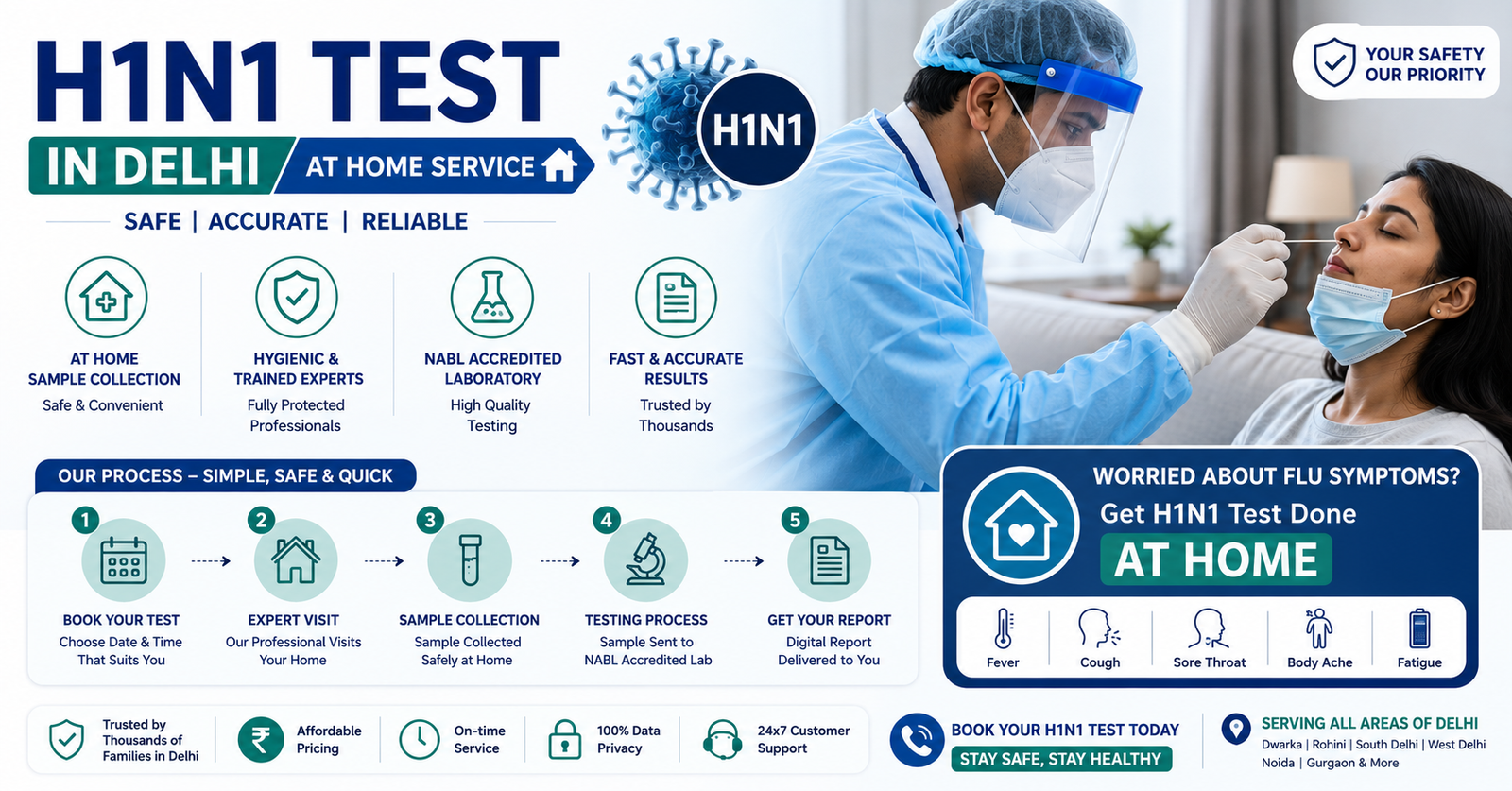
This H1N1 test is often done using a nasal or throat swab as same as Covid, and analysed using RT-PCR (Reverse Transcription Polymerase Chain Reaction), which can accurately confirm the infection. But probably Thyrocare takes the H1N1 test only by throat swab
What Do We Check in H1N1 Test?
The H1N1 test specifically detects the H1N1 strain of the influenza virus. This helps doctors determine if your symptoms (fever, cough, body aches, fatigue, sore throat) are due to swine flu or another flu-like illness.
It’s especially recommended for:
- Individuals with flu symptoms
- Children and the elderly
- Pregnant women
- People with chronic health conditions
When might a doctor recommend it?
It may be considered if you have symptoms such as fever, cough, sore throat, body aches, headache, chills, or fatigue, particularly when influenza is circulating or you are at higher risk of complications.
What is the Normal Range of H1N1 Test?
| Result | Interpretation |
| Positive | H1N1 virus detected |
| Negative | No H1N1 virus detected |
| Inconclusive | Sample may need to be retested for confirmation |
How Thyrocare Collect Sample the H1N1 Test?
- Sample Collection: Nasal or throat swab
- Sample Processing: RT-PCR technique
- Reporting: Result interpretation (positive/negative)
- Turnaround Time: Same-day or next-day results
How Are H1N1 Test Results Considered?
- Positive: Confirms the presence of H1N1 virus. Antiviral treatment and isolation may be recommended.
- Negative: No H1N1 virus detected. Doctor may look for other viral or bacterial infections.
- Equivocal: Inconclusive result – may require a repeat test.
What Diseases Can H1N1 Test Detect?
H1N1 test is designed to detect swine flu, it plays a critical role in ruling out other types of flu and helps avoid misdiagnosis. It makesure:
-
- Prevention of complications like pneumonia
- Reduction in virus transmissio
- Timely flu treatment
- Composition & Ingredients of the H1N1 Test Kit
- The H1N1 test kit includes:
- RT-PCR Reagents: Enzymes and primers to detect viral RNA
- Sterile Swab: For throat and nasal sample collection
- Transport Medium: Keeps the virus viable until lab analysis
- Thermal Cycler (PCR Machine): Used in lab for amplification
- Each component is designed to ensure precision and reliability.
What Is the Use of H1N1 Test?
Approved Uses in India:
- Diagnosing H1N1 infection
- Managing seasonal flu outbreaks
- Protecting vulnerable groups (children, elderly, pregnant women)
Specific Conditions H1N1 Test Helps With:
-
- Swine flu diagnosis
- Post-viral pneumonia
- Influenza-related complications
- Is There Any Risks of the H1N1 Test
The test is non-invasive and safe. Minimal side effects include:
- Mild discomfort during swabbing
- Temporary sneezing or coughing
- Slight nasal irritation
Book Your H1N1 Test in Delhi Today at Thyrocare
Don’t wait for symptoms to worsen — early detection of H1N1 Disease can make all the difference. At Thyrocare, we offer accurate and fast H1N1 RT-PCR testing with expert medical guidance and no waiting time.
Get tested today for peace of mind and timely care.
Call now or Book Online for home sample collection or walk-in testing.
Serving both Indian and international patients with world-class diagnostics.
Thyrocare – Trusted for Safe, Fast, and Affordable H1N1 Testing.
H1N1 Symptoms: A Complete Guide to Signs, Prevention, Diagnosis, and Treatment
Cases of H1N1 flu have risen significantly in Delhi recently, leading to considerable confusion regarding its H1N1 symptoms. Let me explain what these symptoms are. But first, let me clear up a common misconception: symptoms like fever, cough, sore throat, and body aches can also result from ordinary viral infections; therefore, assuming every such instance is an H1N1 infection in Delhi is incorrect. Let us first understand what the H1N1 virus actually is.
H1N1 is a type of influenza A virus that affects the respiratory system; it is essentially what we call “swine flu.” This disease spreads through close contact between people and via droplets from coughing and sneezing.
In this article, we provide a complete guide covering H1N1 symptoms, treatment, and prevention. We also explain how a blood test can confirm if you have contracted the H1N1 virus.
What Is H1N1?
As mentioned, the H1N1 virus is a type of influenza A. It was named H1N1 due to the specific combination of two important proteins—hemagglutinin and neuraminidase—found on its surface.
When the H1N1 outbreak occurred in 2009, it was declared a global pandemic. However, since then, it has become a common circulating virus and is often viewed merely as a seasonal flu; yet, treating it as just an ordinary seasonal virus can be dangerous. Common H1N1 Symptoms
Symptoms of the H1N1 virus can develop suddenly; while they may be quite mild in some people, the infection can sometimes become serious.
Here are some common H1N1 symptoms:
* Fever or chills
* Dry or persistent cough
* Sore throat
* Severe headache
* Body aches and muscle pain
* Extreme weakness or fatigue
* Runny or stuffy nose
* Loss of appetite
* Occasionally, nausea, vomiting, or loose motions (diarrhea)
These common symptoms give you an idea of what H1N1 looks like, though not everyone will necessarily experience all of them.
How Does H1N1 Spread?
H1N1 Swine Flu is a respiratory infection. It primarily spreads when an infected person talks, coughs, or sneezes near others.
Here are other ways the infection spreads: in crowded places, areas with poor ventilation or lack of cleanliness, and by touching contaminated surfaces and then touching your eyes, mouth, or nose.
How to Prevent H1N1?
To protect yourself from the H1N1 virus, you should follow certain precautions. Here are some preventive measures:
* Wash your hands with soap and water after coming indoors.
* Cover your mouth with a tissue or your elbow when coughing or sneezing. * Do not touch your eyes or nose without washing or sanitizing your hands.
* Avoid unnecessary or close contact with infected individuals.
* Ensure proper ventilation in rooms and indoor spaces.
* Consult a doctor regarding vaccinations related to this infection.
* Incorporate a healthy diet, adequate sleep, and proper hydration into your daily routine.
Additionally, use masks and sanitizers in crowded places, as the risk of spreading respiratory infections increases significantly in such settings.
Which Tests Can Detect H1N1?
H1N1 symptoms are quite similar to those of a common seasonal viral infection; given these similarities, identifying the disease based solely on symptoms can be challenging. It is advisable to consult a doctor and undergo testing for an accurate diagnosis. Let me explain the tests used to identify this disease.
A doctor may recommend specific tests after assessing the patient’s condition. The choice of test depends on the patient’s health status, so the specific test prescribed may vary. However, here are some common tests that help identify the disease:
* RT-PCR / Molecular test
* Rapid influenza test
* Respiratory swab test
These tests can be used to identify H1N1.
Is there any treatment for H1N1?
Yes, there is treatment for H1N1, though it depends on the patient’s symptoms. Some people have a mild infection while others have a severe one, but treatment is available for both. The key is that for those with a severe infection, bringing it under control quickly is crucial. Let me explain how you can manage it, though it is also important to consult a doctor so you can recover faster.
In this situation, the patient should get sufficient rest and avoid dehydration. If you are experiencing fever or body aches, it is essential to take medication based on a doctor’s advice.
Important Note: Antibiotics do not work against viruses; therefore, it is not advisable to take them on your own, nor should you take antivirals without a doctor’s recommendation.
Conclusion
Identifying H1N1 in Delhi symptoms is crucial because, in some cases, the infection can lead to a serious condition. Relying solely on symptoms to confirm an H1N1 infection can be risky, as the symptoms of the H1N1 virus closely resemble those of a common seasonal viral infection; therefore, self-medicating without professional advice is not advisable.
If you consult a doctor and describe your symptoms, they may recommend diagnostic tests such as a respiratory swab (molecular/RT-PCR or rapid influenza test). Alternatively, depending on the severity of your condition, the doctor might prescribe medication without ordering any tests; this approach depends entirely on the specific clinical situation.
The key takeaway is to seek medical advice rather than panicking or taking medication without a doctor’s guidance.
FAQs
Can H1N1 test done before surgery?
Yes, can H1N1 test done before surgery. If a patient has flu-like symptoms, doctors may recommend it to prevent post-surgical complications or virus spread in healthcare settings.
How early do we get H1N1 test results?
At Thyrocare, results are typically available on the same day if the sample is collected before 12 PM, or by the next day if collected after 12 PM.
Can Kids take the H1N1 test?
Yes, the H1N1 test its Sterile Swab based test no blood is needed. The test is completely safe for children. It’s often recommended for kids showing flu symptoms.
What should I do if my H1N1 test is positive?
Self-isolate, follow your doctor’s advice, and start antiviral medications if prescribed. Drink fluids and monitor symptoms closely.
How is H1N1 transmitted?
It spreads through droplets when an infected person sneezes or coughs. Direct contact with contaminated surfaces can also lead to transmission.
Is the test painful?
No, the swab collection is quick and causes only minor discomfort for a few seconds.
Take The charge of health
Send us a message and we will reach you as soon as possible. You can even call us directly. WhatsApp No. 9811156942


